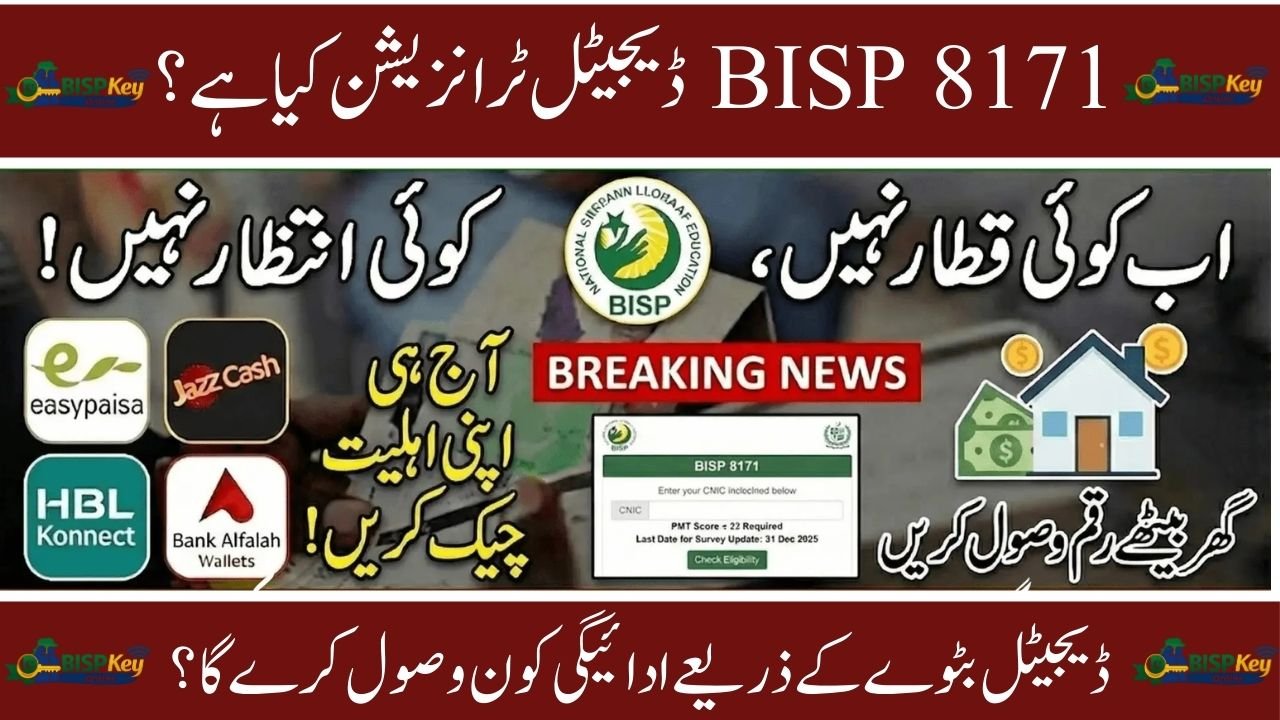
In 2025, BISP 8171 begins a full digital transition for Kafaalat families. Payments move toward digital wallets instead of only cash camps and retailers. The goal stays simple. Faster payments. Fewer problems.
This shift affects how families receive money, track payments, and raise complaints. It also changes how fraud is controlled.
What is the BISP 8171 digital transition?
The BISP 8171 transition means Kafaalat payments will be sent directly to digital wallets linked to a beneficiary’s CNIC and phone number instead of relying only on physical cash points. This system improves speed, tracking, and security while keeping women in control of funds.
The cash amount stays the same.
The delivery method changes.
Think of it like moving money from envelopes to bank notes in your pocket. Same value. Better control. Official Website
Why BISP is shifting to digital wallets in 2025
Cash systems leak.
Queues waste time.
BISP faced delays, biometric failures, and agent complaints for years. Digital wallets reduce these issues by sending money straight to the beneficiary.
Key reasons behind the shift:
- Fewer payment delays
- Lower fraud risk
- Better tracking of funds
- Less crowding at camps
This move also aligns with Pakistan’s broader digital payment push.

What is a digital wallet in BISP terms?
A digital wallet is not a bank account.
It’s simpler.
It’s a mobile-based account linked to:
- The woman’s CNIC
- Her registered SIM number
Money lands directly in the wallet. She can:
- Withdraw cash
- Keep balance
- Use it for basic digital payments
No internet is required for basic use.
Who will receive payments through digital wallets?
All eligible BISP Kafaalat families are gradually being shifted to wallets during 2025, starting with verified beneficiaries who have CNIC-linked SIM cards and complete biometric records.
Priority goes to:
- Women with valid CNICs
- Active BISP records
- Verified phone numbers
Those not ready won’t lose money. They move later.
Is the digital wallet compulsory?
Yes. Gradually.
BISP plans a complete shift, but not overnight. Cash options remain during transition. Wallets become the default once systems stabilize..
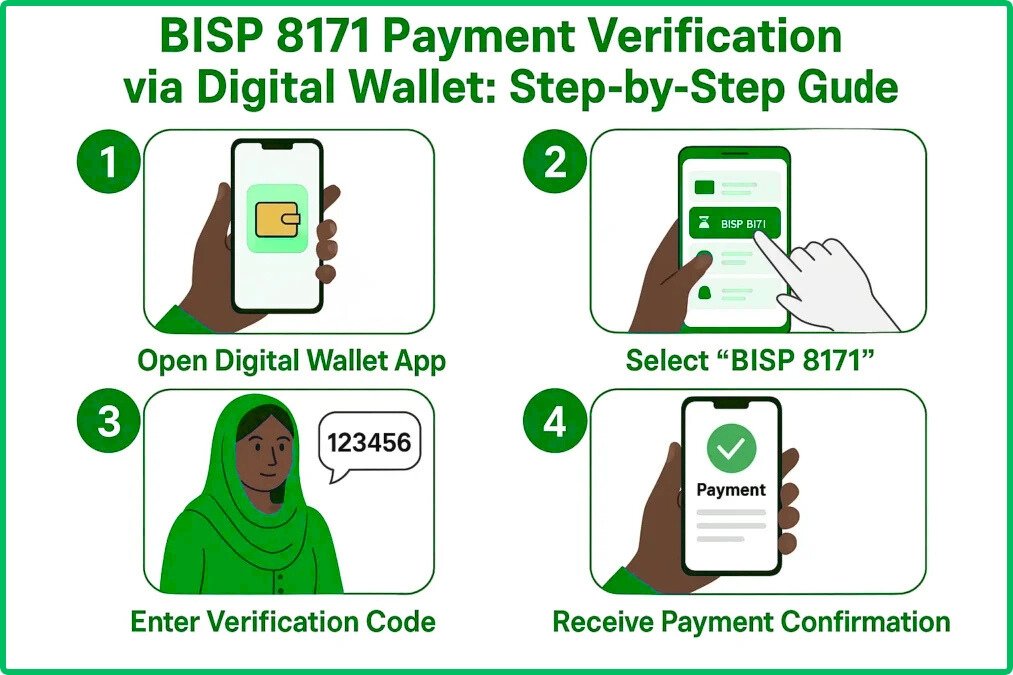
How payments will work under the new system
The process stays clear:
- Payment is approved under 8171
- Amount is credited to the wallet
- SMS alert confirms deposit
- Cash can be withdrawn anytime
Biometric verification remains for withdrawals.
That keeps control tight.
Why women benefit most from digital wallets
Control matters.
Information equals power.
When money lands directly in a woman’s wallet:
- No middlemen interfere
- No shared phones needed
- Spending decisions stay personal
Studies show women spend more on food and school needs. Digital access strengthens that pattern.
Role of SIM cards in the digital shift
SIM cards are the backbone.
Each wallet links to a CNIC-verified SIM. This ensures:
- One woman, one wallet
- Official alerts only
- Fewer fake messages
Without SIM verification, wallets fail.
That’s why free SIM rollout matters.
Which wallets will BISP use?
Only approved wallets qualify.
These wallets:
- Support biometric verification
- Link with national databases
- Meet security standards
Private agents can’t enroll users.
Details come through official channels only.
What if a beneficiary doesn’t want a wallet?
Choice stays for now.
Cash collection remains during transition. But over time, wallet use becomes standard.
BISP focuses on comfort first.
Compliance comes later.
Impact on rural Kafaalat families
Rural families face distance.
Travel costs add up.
Wallets reduce trips.
Alerts replace guesswork.
Where networks are weak, cash options remain. No area gets cut off.
Flexibility keeps trust alive.
How this reduces fraud and complaints
Fraud thrives in confusion.
Wallets bring clarity:
- Every transaction is logged
- Alerts confirm receipt
- Identity checks block misuse
Complaint resolution improves because data exists.
Dates. Amounts. Receipts.
Less arguing.
More proof.
What beneficiaries should do now
Stay prepared.
Not rushed.
- Keep CNIC valid
- Update phone number at BISP center
- Ignore calls asking for fees
- Trust only official SMS
Preparation avoids delays later.
How complaints will work under digital wallets
Tracking gets easier.
Wallet records show:
- When money was sent
- When it was withdrawn
- Where delays occurred
This shortens complaint cycles.
Facts settle disputes fast.
Link with other BISP reforms
The digital shift isn’t alone.
It connects with:
- Online CNIC verification
- Eligibility updates
- SIM-based alerts
All pieces support one goal.
Cleaner delivery.
What happens if a phone is lost?
Loss happens.
Rules exist.
Report the issue at a BISP office.
CNIC verification follows.
Wallet access restores after checks.
No penalties for genuine cases.
Long-term impact on social protection
Digital systems scale better.
They allow:
- Faster expansions
- Better targeting
- Lower admin costs
Cash support stays human.
Delivery gets smarter.
Conclusion
The BISP 8171 digital transition in 2025 marks a clear shift toward safer and faster payments for Kafaalat families. By moving payments into digital wallets linked to verified SIMs and CNICs, BISP cuts fraud, reduces delays, and gives women direct control over support. The change is gradual, practical, and grounded in reality. For beneficiaries, it means clearer information, fewer trips, and steadier access to cash when it matters most.
FAQs
1. What is the BISP digital wallet system?
It’s a mobile-based wallet linked to a woman’s CNIC and SIM where Kafaalat payments are credited directly.
2. Will cash payments stop immediately?
No. Cash options remain during the transition. Wallets become the main method over time.
3. Do beneficiaries need smartphones?
No. Basic phones work. Internet isn’t required for SMS alerts and withdrawals.
4. Is there any fee for using the wallet?
No. BISP payments and wallet access are free for beneficiaries.