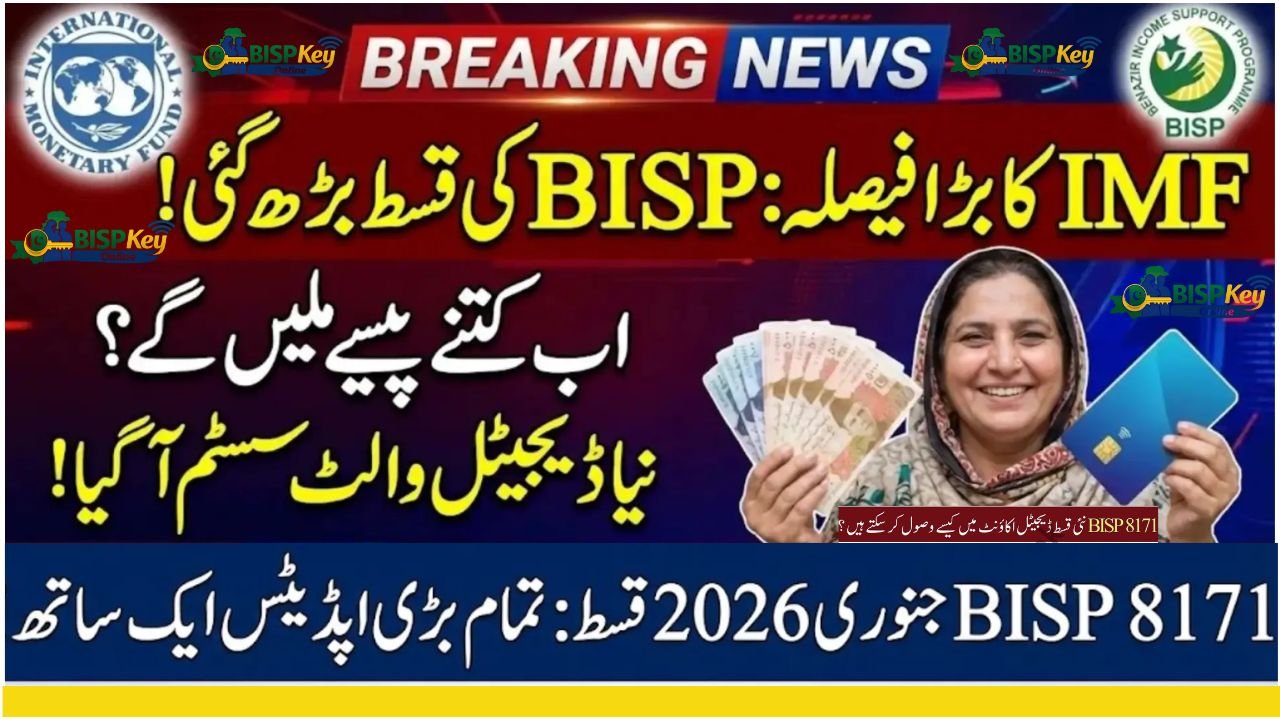
Islamabad: Pakistan’s main cash support program, BISP 8171, is entering a new phase between 2025 and 2026. The updates include a major budget increase backed by the IMF, free SIM cards for eligible Sindh women, higher qist payments from January 2026, online CNIC verification, a mobile wallet payment option, and revised eligibility rules.
These steps aim to protect low-income families during inflation pressure while improving transparency and payment control.
IMF Welcomes BISP 8171 Budget Increase (2025)
The International Monetary Fund (IMF) has welcomed Pakistan’s decision to increase the BISP 8171 budget in 2025.
According to official budget data:
- BISP funding increased by over 25 percent
- Total allocation crossed PKR 590 billion
The IMF confirmed that targeted cash transfers like BISP protect vulnerable households without harming economic stability. Social spending under BISP remains protected under IMF program conditions. Bisp Official Website
Why the Budget Increase Matters
Rising prices reduced the real value of cash support. Food, transport, and school costs increased faster than income.
Higher BISP funding allows:
- Improved payment capacity
- Wider beneficiary coverage
- Continued support during reforms
IMF prefers cash transfers over subsidies because they reach households directly and reduce leakage.
What Is BISP 8171?
BISP 8171 is Pakistan’s largest cash support program. It provides regular payments to eligible low-income women using CNIC-based targeting and biometric verification.
Key features:
- Payments issued in women’s names
- CNIC and biometric checks
- Digital tracking to reduce misuse
Free SIM Cards for Sindh Women: What’s Confirmed
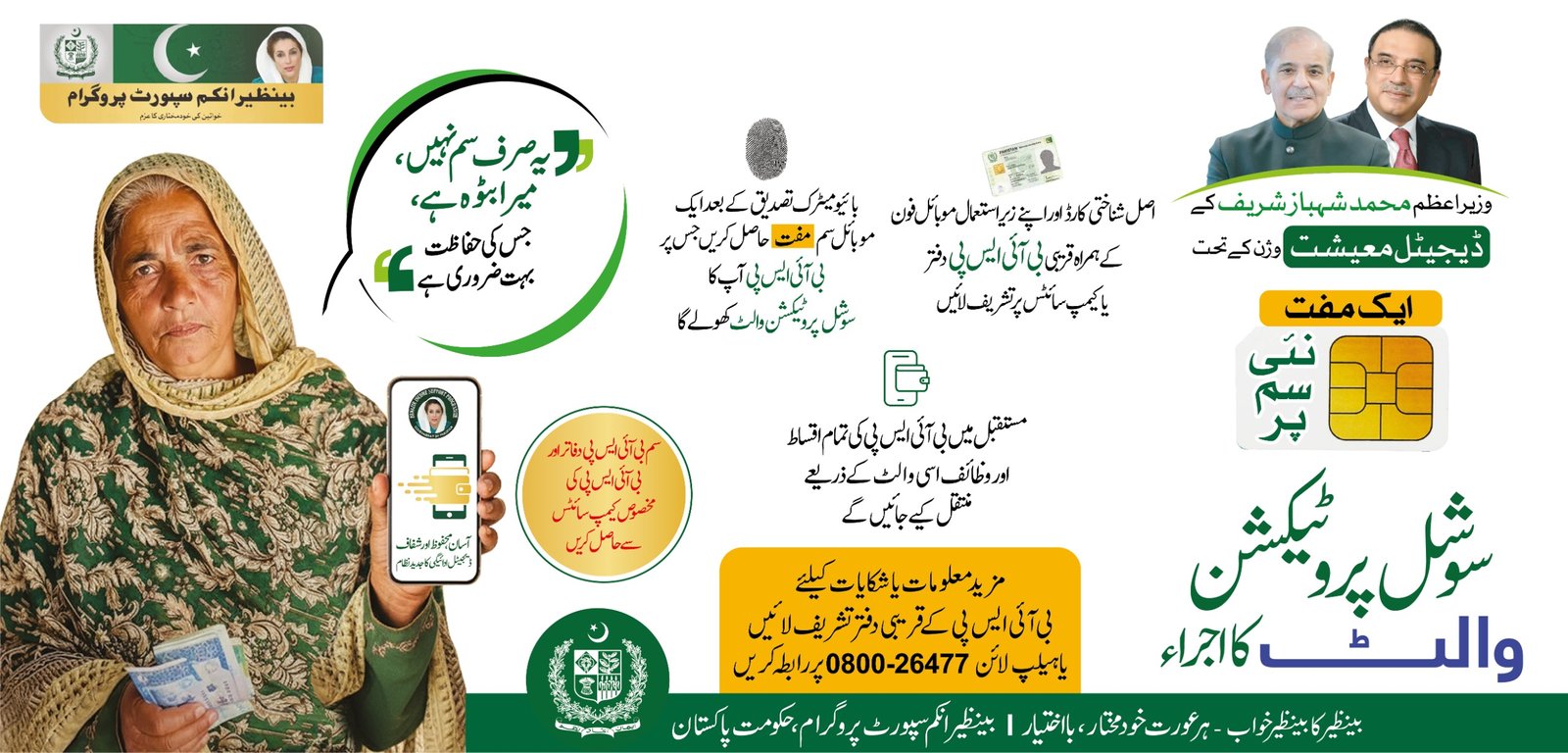
In 2025, BISP announced a Free SIM Cards program for eligible women in Sindh.
Main points:
- SIM cards will be free
- SIMs will be linked to CNIC
- Only existing eligible BISP women qualify
- No registration fee
- No agents involved
The SIMs will help women receive official payment alerts and reduce fraud.
When Will Payments Start Through SIM Cards?
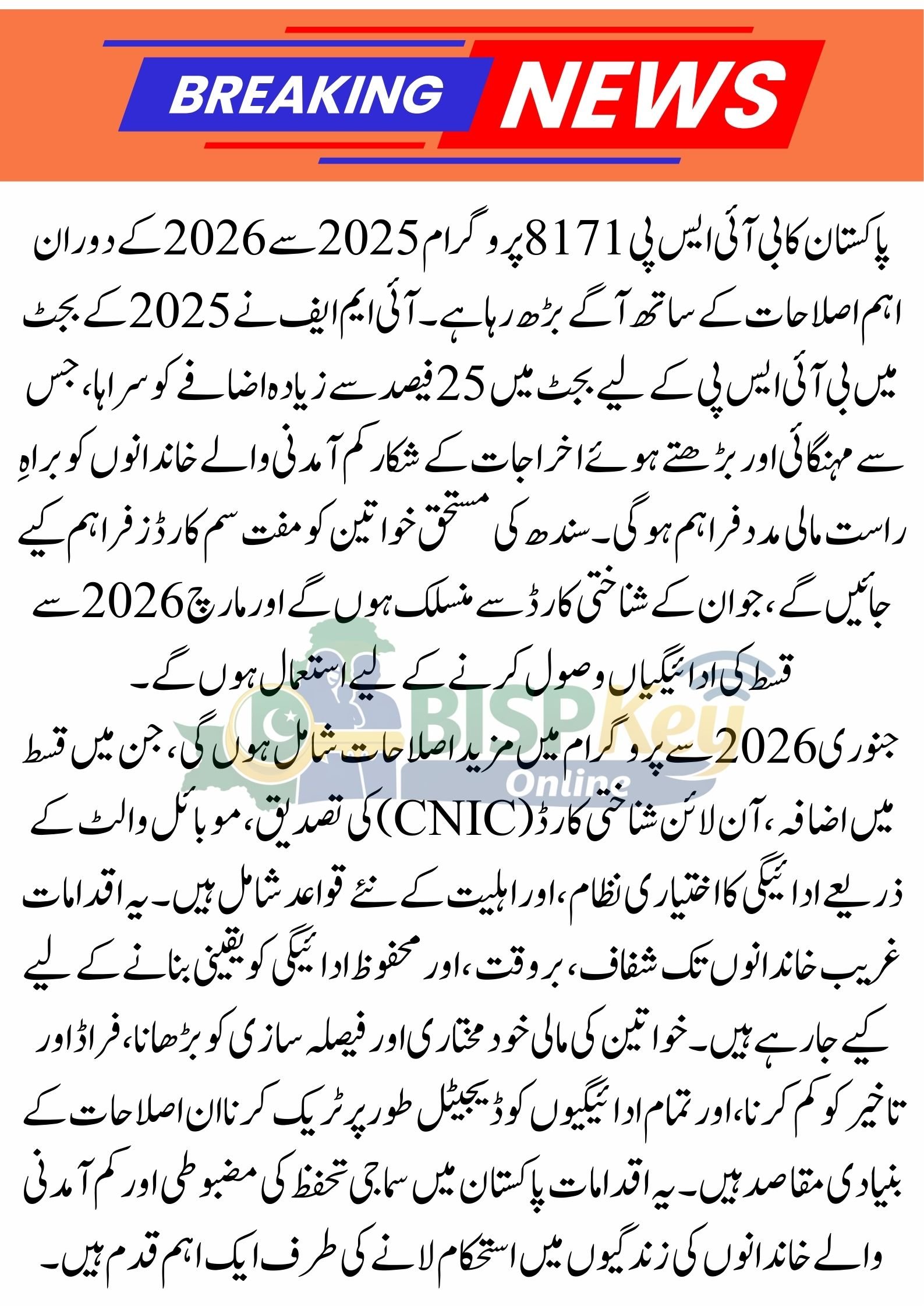
Qist payments through the SIM-linked system will start from March 2026.
The gap allows:
- SIM distribution
- CNIC verification
- Telecom activation
- System testing
Until then, current payment methods will continue.
Will the SIM Change Payment Amount?
No.
The SIM card:
- Does not change eligibility
- Does not change payment amount
Payments will follow existing BISP rules. Any future increase depends on the federal budget.
How SIM Cards Will Be Distributed
- Distribution in phases
- District-wise rollout
- Collection from official BISP centers
- CNIC verification mandatory
There will be no door-to-door delivery.
Why SIM Cards Instead of Apps?
Many women use basic phones and lack internet access. SIM-based SMS alerts work without data and reach rural areas more reliably.
January 2026: Major 8171 Changes Announced
From January 2026, the following updates will apply nationwide:
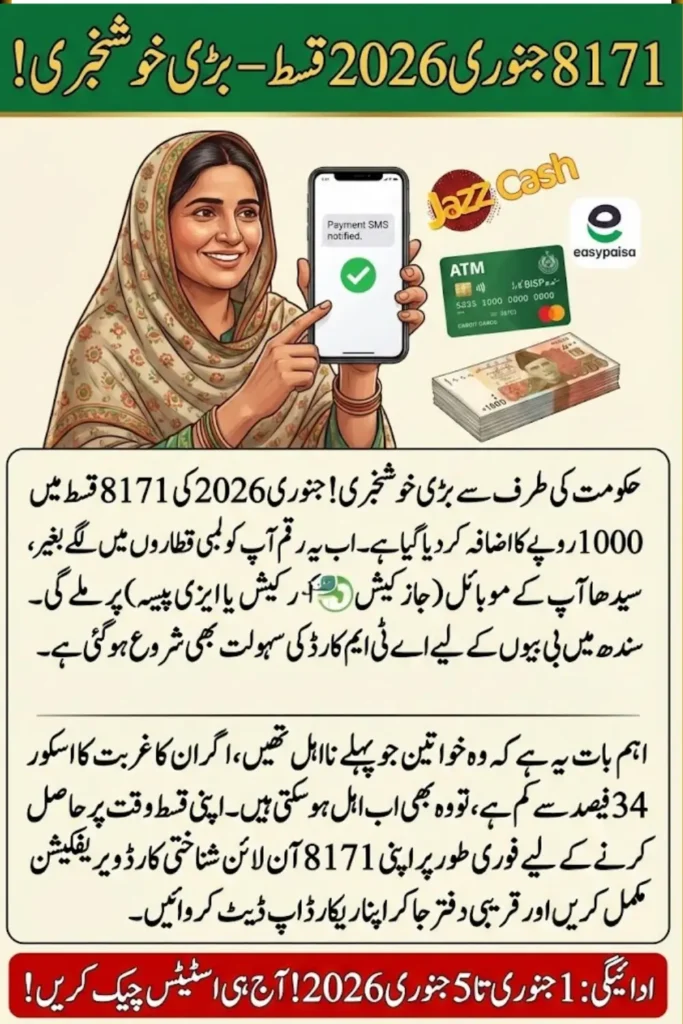
- Increased quarterly qist
- Online CNIC verification
- Mobile wallet payment option
- Updated eligibility rules
Payment Increase From January 2026
The government has approved a higher quarterly qist starting January 2026.
The increase reflects:
- Food inflation
- Utility bills
- Education expenses
No beneficiary will receive less than before.
Online CNIC Verification System
Beneficiaries can check eligibility and payment status through:
- Official 8171 web portal
- SMS CNIC to 8171
This reduces office visits and delays.
Mobile Wallet System Explained
A mobile wallet option will be introduced for payments.
Key details:
- Wallet linked to CNIC and phone number
- Cash withdrawal or digital use
- Biometric verification required
The wallet option is optional. Cash payment methods will continue.
New Eligibility Rules in 2026
Eligibility will be updated using:
- Household income indicators
- Utility usage data
- Property and vehicle records
Families whose financial situation improves may exit. Newly vulnerable families may be included through updated surveys.
Appeal options will remain available.
Fraud Control and Transparency
New systems strengthen fraud prevention:
- CNIC-linked SIMs
- Online verification
- Wallet transaction records
- Biometric checks
These steps limit fake calls, duplicate payments, and agent interference.
Official Warnings for Beneficiaries
- No fees for SIM cards
- No fees for wallet enrollment
- No agents allowed
Only trust official SMS messages and BISP announcements.
Conclusion
Between 2025 and 2026, BISP 8171 is undergoing structural changes. IMF-backed budget growth, free SIM cards for Sindh women, higher payments from January 2026, online CNIC verification, mobile wallets, and revised eligibility rules aim to improve access, fairness, and control.
The focus remains clear: protect poor families while reducing fraud and delays.
FAQs
1. When will Sindh women receive payments through SIM cards?
From March 2026, after system rollout and verification.
2. How much did the BISP budget increase in 2025?
By over 25 percent, crossing PKR 590 billion.
3. How can CNIC be checked for January 2026 payments?
Via the official 8171 portal or by sending CNIC via SMS to 8171.
4. Is the mobile wallet mandatory?
No. Cash payment methods will continue.
5. Can eligibility change in 2026?
Yes. Eligibility depends on updated household and income data, with appeals allowed.